
 drewmcmanus
The Melting Pot Spotlight: KASA Quartet
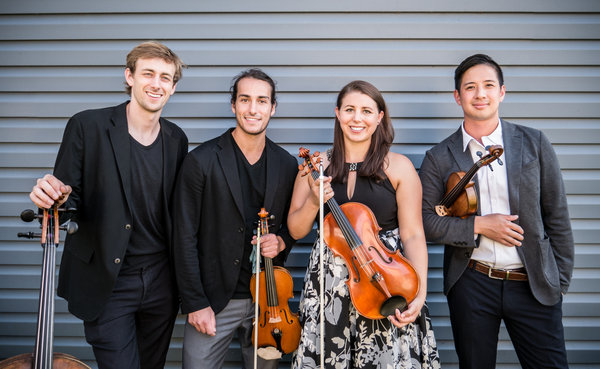
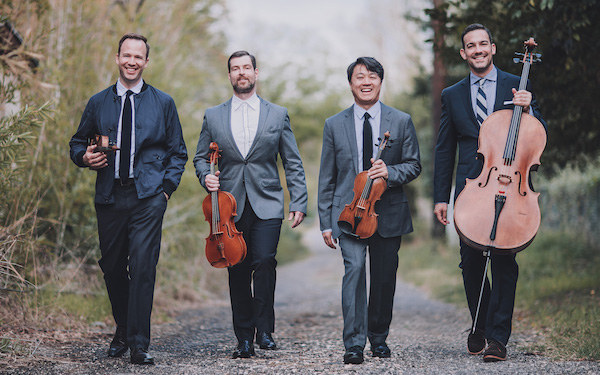
We spoke with this month’s featured artists KASA Quartet about their new Marvin Hamlisch project. Learn about their collaboration with the Hamlisch family to honor one of America’s most beloved and highly acclaimed composers, and about how the quartet interprets music from around the globe. KASA, the first prize winners of the 2017 Coltman Chamber Music Competition, will be premiering their arrangement of Hamlisch’s Sweet Smell of Success on April 26 and 27 at The Melting Pot alongside music by Robert Schumann and Joaquín Turina. Friday tickets are sold out and limited Saturday tickets are available, including only a few Premium seats; buy your Saturday tickets now!
Tell us about your Marvin Hamlisch project.
Our Marvin Hamlisch project began two years ago upon connecting with Terre Blair Hamlisch, Marvin’s widow. Kyle was asked to arrange a few of Marvin’s selections for quartet by Ms. Blair Hamlisch to be performed at an event commemorating Marvin’s life. She was very enthusiastic about the result, which led her to ask if we could explore doing more string quartet arrangements of his pieces. This includes the Sweet Smell of Success, a musical written by Marvin that premiered in 2001 on Broadway only a mere month following the 9/11 tragedy. The brilliance of this work as one of his last major Broadway musicals holds a special place for Marvin and Terre, which led us to choosing it. She knows we are performing this in Austin at the Austin Chamber Music Center Season Finale and wishes she could be there, but is thrilled to hear that this arrangement will be given its premiere at the series.
How does this project embody the idea of the pioneering American spirit?
Marvin Hamlisch was often known as the “composer of the people.” His music resonated with American concert, movie, and theater goers leading to his PEGOT honors [Hamlisch is one of only two people to have won Pulitzer, Emmy, Grammy, Oscar, and Tony awards]. For us personally, taking the music of one of the greatest American composers who has multiple genre interests fits directly within our goal to create innovative and versatile programs that feature a variety of styles. We believe his music and this project embody his versatility, and how it resonates with those trailblazing new paths.
You’re also performing works by Turina (of Spanish origin) and Schumann (of German origin). Tell us how you approach music from different cultural backgrounds and how your own cultural backgrounds inform your performances.
We feel that listening to the language of the culture and understanding the history of the composer and the context of their place within that culture’s history helps inform our interpretation and sound. The slight differences in storytelling styles and articulation affect everything from phrasing to the way we use our bows and vibrato. Some of it is conscious decisions being made and other parts of it are out of instinct that has developed through years of performing these composers’ works in various settings across the globe.
East Meets West Spotlight: Sandy Yamamoto
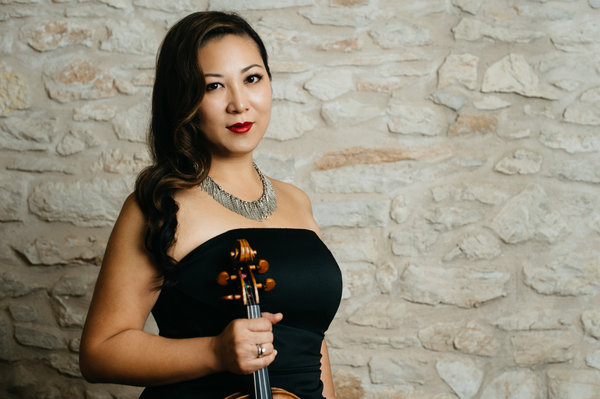
We spoke with this month’s featured artist Sandy Yamamoto about her years growing up as a violinist in a Japanese family. Learn how a rose inspired her career and where her musical side comes from in our interview. Sandy will be performing music by Debussy, Ravel, and Takemitsu on March 1 and 2 at East Meets West. Friday seats and Saturday premium seats are sold out; be sure to buy your Saturday GA tickets now to hear her perform with Amy Levine-Tsang and Michelle Schumann in their award-winning ensemble, the Schumann Chamber Players!
Where did you grow up, and how did music fit into your childhood?
I grew up primarily in four places as a child. I was born in Columbus, OH, to first generation Japanese parents, so Japanese was my first language, and I started playing the violin when I was four years old and piano when I was five. I moved to Littleton, CO when I was six, then to Chapel Hill, NC when I was ten, and then I went to a boarding arts school in Winston-Salem, NC (UNCSA – University of North Carolina School of the Arts) when I was fourteen. I started playing the violin because my mom’s Japanese friend came over and brought her daughter over with her. They had just come back from a violin lesson. Since the violin was not a toy, I was not able to touch it. As a three-year-old, I was extremely curious about this “toy” that I couldn’t touch. Then, we were invited to that daughter’s violin recital. I don’t remember what she played, but when she finished playing, I remember that everyone applauded and she got a rose!! I wanted that rose so badly, that I decided that I needed to play the violin too. I begged my parents to let me play the violin for a year. Little did I know that you could just go to a florist to get a rose… I would use chopsticks, stand on our coffee table my father made (my mother still has this in her home) and pretended that I was performing. They finally found out about rental violins, rented me a violin, found a violin teacher with a Japanese wife (this was very important since my parents’ English wasn’t great), and the rest is history. My dream of getting a rose finally came true at age five when I played in a talent show. It was actually a busy evening for me. I first danced — both tap and ballet — and then I played the first movement of the Seitz Violin Concerto #5. After I finished performing, Kermit the Frog from another act of the talent show came out on roller skates, gave me a kiss, and gave me a ROSE!! My dream came true, and it inspired me to keep playing the violin. I started out with the Suzuki Method, and went through all of the books with some supplemental pieces. It was a great way for me to learn music except for the fact that I did not read music until after I finished all of the Suzuki books. Luckily, my Suzuki piano teacher implemented some note reading, so I eventually learned how to read music. Sight reading was a real challenge for me, and it took some really nice college friends to read chamber music with me every week for me to get better at reading music.
Did your family’s Japanese heritage affect your music-making?
I’m not sure if my Japanese heritage affected my music-making except for the fact that I had typical Asian parents that pushed me to do the very best in all subjects, including the violin and piano.
What is your favorite musical memory or artistic work from Japan or from your family?
My favorite musical memory with my family is probably when my father pulled out a harmonica at our wedding rehearsal dinner, and started playing all sorts of tunes including Japanese folk tunes. Not many people knew that he is a pretty talented harmonica player. He did something similar at my brother’s wedding in Japan, except he pulled out his guitar and sang a song. I think my musical side came from my father. I also found out that his father, my grandfather played violin until his house along with his violin got burned down during World War II. My grandmother from my father’s side was also musical. She played the shamisen, a Japanese three-stringed traditional instrument derived from the Chinese instrument sanxian.
Black Composers Concert Preview: Sightlines
A Concert of African Diaspora Composers, from the 18th Century to contemporary Puerto Rico
For this year’s award-winning Black Composers Concert, curator Artina McCain taps composers of African descent from Europe, Central and South America, the Caribbean, and the United States.
By Dana Wen, February 1, 2019
Last year, the Boyd Vance Theatre at the George Washington Carver Museum was so packed that ushers had to cart in extra chairs. The crowd, a sea of diverse faces, included parents with small children in tow, chit-chatting grandmas, and young couples. All of them had braved the cold winter day to hear some chamber music, specifically a program featuring Black female composers.
Every February, the Austin Chamber Music Center’s Black Composers Concert provides a midwinter musical treat after the blizzard of the holidays. Curated by pianist Artina McCain, the annual chamber music concert celebrates the contributions of Black composers from around the world. Now in its 16th year, the annual tradition was a bit of a local secret until recently.
“We’ve been standing room only for the last three or four years,” says McCain recently, still sounding a little surprised at the project’s runaway popularity.
But after listening to last year’s carefully-crafted program, it’s easy to see why the crowds keep coming. Each Black Composers Concert focuses on a central theme, providing a common thread to draw the audience in. This helps McCain expertly guide her listeners through a program of music that may be unfamiliar or completely new to them.
Clearly, it’s a journey of learning and musical discovery that audiences find thrilling. Along with the full auditorium, last year’s concert, titled “The Black Female Composer”, garnered McCain a 2018 Austin Critics Table Award for Best Classical Instrumentalist.
This year, McCain has set her sights on a global scale. “The African Diaspora”, the 2019 Black Composers Concert (performances on February 9 and 10), features composers of African descent from Europe, Central and South America, the Caribbean, and the United States. The global focus ties in with “Landscapes”, the theme of Austin Chamber Music Center’s current concert season, which explores ideas of heritage and homeland around the world.
Since previous Black Composers Concert programs focused primarily on the African-American experience, McCain relished the opportunity to represent an even-wider range of musical viewpoints in “The African Diaspora”.
“There are so many composers of African descent all over the world, and their music isn’t programmed that often,” she laments. “That led me on this journey of learning about all these composers that lived in different parts of the world. This has been a really interesting and fun program (to curate) because the pieces are so different from each other, but all of the composers were classical or formally trained.”
As a young piano student with traditional conservatory training, McCain noticed that Black composers were often left out of history classes and concert programs. She took it upon herself to learn more, uncovering a treasure trove of rarely-performed repertoire. What began as a sense of curiosity led to a lifelong passion, resulting in a doctoral thesis (on African-American composer George Walker) and eventually her current role as curator of the Black Composers Concert – the ideal platform for exploration and sharing.
“I had played so many Black art songs and Black spirituals, which more people are probably familiar with,” explains McCain. “But I wanted to learn more about the concert repertoire, more about Black composers’ contributions to Western music.” Often, these are the stories that don’t make it into the history textbooks and symphony halls.
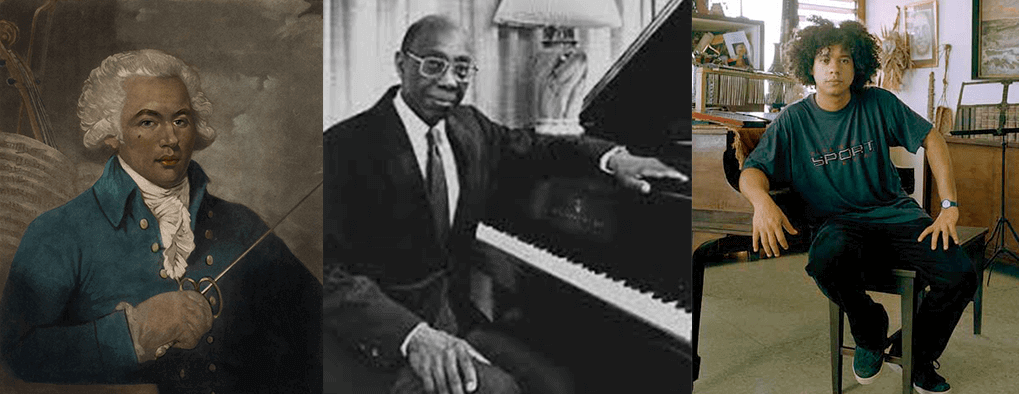
A prime example of this is George Walker, whose Sonata for Cello and Piano is featured on the “The African Diaspora” program, performed by McCain and cellist Elizabeth Lee.
A talented pianist, Walker graduated from Oberlin Conservatory and Curtis Institute of Music in the 1930s and 1940s, at a time when opportunities for Black classical musicians in the U.S. were slim. Despite this, he built a distinguished career as a performer, teacher, and prolific composer, producing works for piano, chamber ensemble, and orchestra. Though Walker’s music draws primarily from his training as a classical pianist, it includes elements of jazz, gospel hymns, and other uniquely American musical forms.
In his later years, Walker began to gain wider recognition for his contributions, winning the 1996 Pulitzer Prize in Music. He was the first Black composer to receive the award. By the time of his death in 2018, Walker’s music had gained popularity, though he remains far from a household name.
McCain would like to change that. “I wanted to pay homage to George Walker because he is, in my opinion, one of the great American composers,” she says resolutely. “I believe he probably doesn’t have the same status as George Gershwin or Aaron Copland because Blacks were not celebrated in that way in the 1940s, 50s, and 60s. A lot of Black musicians have always known and respected his music, but I find as far as mainstream classical performers and (ensembles) go, many people don’t know his works or don’t program them.”
Another 20th century composer featured on the “The African Diaspora” program is violinist Noel DaCosta. Born in Nigeria in 1929, DaCosta spent his youth in Jamaica and eventually moved to New York City, where he established his musical career.
Like Walker, DaCosta drew upon jazz rhythms and harmonies when writing his compositions. For “The African Diaspora”, McCain chose the blues-influenced “Walk Around ‘Brudder Bones’,” a thrilling and demanding work for unaccompanied violin, featuring soloist Christabel Lin.
Along with presenting music from a variety of countries and cultures, McCain also chose works to represent different periods in Western music history. It’s a way to underscore that Black composers have been prolific, if not widely recognized, throughout the centuries.
Joseph Bologne (typically known by his noble title, Chevalier de Saint-Georges) was one of the earliest known classical composers of African descent. A movement from his Sonata No. 2 for Violin and Piano will be performed by McCain and Lin.
Born in 1745 in Guadeloupe, a French colony in the Caribbean, Saint-Georges was the son of a wealthy French landowner and an African slave. He spent much of his youth in Paris, where he received a noble’s education and developed a reputation as a master fencer. Eventually, the young Saint-Georges turned to music, becoming a prolific composer and conductor (while still finding time for swordsmanship activities and military campaigns).
As a curator, McCain rarely misses the opportunity to present something new. One highlight of “The African Diaspora” is a medley of Puerto Rican bomba y plena tunes performed by local percussionist Samuel López and members of his ensemble.
A signature feature of Puerto Rico’s musical landscape, bomba y plena encompasses a series of rhythmic patterns that trace their ancestry back to African tribal music. Throughout the past 400 years, bomba y plena has been used to evoke the Puerto Rican experience, from slavery and political protest to occasions of celebration and dance.
“We’ve never had a percussionist on the program, so that’s going to be a great surprise,” explains McCain excitedly. “I really wanted to include music from Puerto Rico (in the program). Sammy’s an amazing musician, so I just step back and let him do what he does best. I will be listening to the music for the first time at the concert, along with the audience.”
Along with her role as curator for the Black Composers Concert, McCain juggles a busy schedule as a professor, lecturer, and touring artist. Though many of her performances feature “mainstream” favorites from the classical repertoire, McCain is pleased that her work with the Black Composers Concert has generated interest and demand for lesser-known music by composers of color. In 2019, she will present several “encore” performances of last year’s “The Black Female Composer” program alongside baritone James Rodriguez.
An album of solo piano music is also in the works. Titled “Heritage: An American Legacy”, the collection draws inspiration from McCain’s work with Black composers and her love of American music.
And she’s already looking ahead to the 2020 Black Composers Concert, hoping to shine light on living composers who are still actively contributing to the musical fabric of the 21st century.
Through all of this, McCain cites a desire for equality as her driving factor.
“I want to see people of different shades, hues, ethnicities, and (genders) on the stage performing equally on every program and in every orchestra. That would be a dream.”
It’s All Greek to Me Spotlight: Nora Karakousoglou
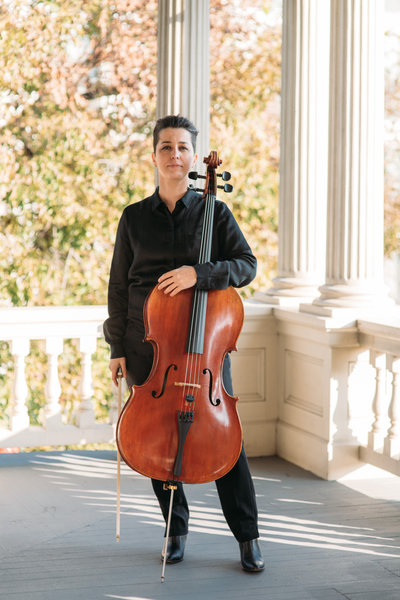
We recently spoke with this month’s featured cellist Nora Karakousoglou about her formative years in Athens. Learn about her family’s Greek holiday tradition and how it—and they—helped shape her musical life in our interview. Nora will be performing on January 18 and 19 at It’s All Greek to Me. Be sure to buy your tickets now to hear her perform with Sonja Larson and Michelle Schumann!
Where did you grow up and how did music fit into your childhood?
I grew up in a suburb of Athens, Greece. Both my parents’ occupations were centered around fixing teeth: my mother, Theodora, is a dentist, my dad, Stefanos, an orthodontist. So, naturally, I became a cellist! Well, it was not exactly that simple, but I was incredibly fortunate in three significant ways: both my parents appreciated classical music and valued music education, my dad had a substantial collection of LPs and CDs of classical masterworks by distinguished artists, and my endlessly creative aunt, Antigone, never missed an opportunity to take me to live concerts, introduce me to Greek music, and purchase music scores for me. When I was four years old, I started piano lessons with Phoebe Vallinda, with whom I studied for about four years. Though the memories of those lessons are few and a little blurry, I have a strong sense that she planted the seeds that made me who I am today. Looking back now, I realize that she was the best teacher I ever had. She was also the one who suggested to my mother that I switch to a stringed instrument. She said something along the lines of “Greece needs more good string players, we have enough pianists.” That sentence was the beginning of a long journey into unknown territory, with my mother as the explorer: she was the leading force behind finding teachers, contacting them, asking the tough questions, driving me to and from lessons. And she did all that for my three younger sisters as well, a story for another time. The first stringed instrument I tried was the violin, but it was a very rough start. After a year of struggling with it, another influential pedagogue, Nelly Oikonomidou, suggested I start the cello. I was nine years old. About two years into playing the cello, and after what seemed an impossible decision to make, I decided to quit piano lessons. Since then, I have had twenty-five years of lessons on the cello, with fourteen cello teachers in three different countries.
What is your favorite musical memory or artistic work from Greece?
My favorite musical memory comes from when I was a teenager. Had you asked me back then, I would have absolutely not chosen that as a highlight of my musical life in Greece. Now, however, I recognize its significance in my musical upbringing. My family considers hospitality to be one of the most valuable traits of a Greek household. Taking that to the extreme, as they tend to do with a lot of things, they threw some memorable Christmas parties at our house. The majority of the friends we invited were either professional musicians, amateur musicians, or just music lovers who were unafraid to sing. We would open our house at around 8pm (which is considered very early for dinner in Greece), music would start at around 10:30pm, and the last guests would sometimes leave after sunrise. At any given point we had at least three pianists, two guitarists, three violinists, and a number of volunteers for vocals. Occasionally there would be an accordion player, harmonica, bouzouki (Greek traditional instrument) or recorders. The repertoire included anything from improvisations on Greek songs and Beethoven piano sonatas to spontaneous arrangements of jazz tunes for any instrumentalist who was awake after dessert. I have a vivid memory of being asked by my dad to play some Bach for “change of pace”: it was around 4am, and the lights had been dimmed to accommodate our happy but sleepy guests, who felt comfortable to use any surface to snooze before they played another piece of music. Some of my friends were asleep on the couch, others were having their seventh cup of coffee. A colleague was dozing with her violin on her lap. One of her children was trying to stay awake, but eventually fell asleep and dropped a spoon – the sound woke everyone up. A little nervous and definitely sleepy, I began to play the famous G Major prelude for solo cello by Bach, probably for the first time in public. To this day, I don’t know if, in a room full of people, anyone even heard that a cello was being played. I remember being mad at my dad for having asked me to play, but I think I was just grumpy and sleepy. Since then, I’ve played the same piece for people to enjoy in numerous public places including department stores, grocery stores, the optometrist’s office and even the mechanic’s garage where I got my car tires changed…and also the site of the 2013 Boston Marathon bombing. Though I may have been resistant at that Christmas party, reminding myself that I made it through that unusual first performance has given me the reassurance I needed to share my music with people in public spaces. It has become one of my favorite things to do!
Nostrovia Spotlight: Misha Rachlevsky
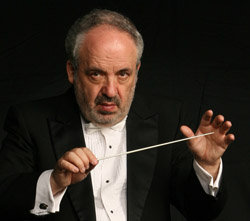
Since 1991 Misha Rachlevsky has led the Russian String Orchestra in performances throughout Moscow and the globe. Learn about his early years in Moscow before becoming an internationally-acclaimed violinist and conductor (despite disliking practice!) in our recent interview.
Where did you grow up, and how did music fit into your childhood?
I was born in Moscow and educated there. My Grandma took me to the music school before my sixth birthday, two years before I began general school. I liked everything about music school, but practicing. The fact that I did become a professional musician is no less than 95% due to the wonderful teachers I had. The importance of a good teacher is impossible to overestimate, and for string players in particular.
What is your favorite musical memory or artistic work from Russia?
Even though modesty is not my forte, this one is easy to answer. I have not one, but many favorite musical memories that originated during my “Russian” years. The range of these memories is very wide, and they all have one thing in common — I was participating in them not as a performer, but as a listener. And that contributed a great deal to my development as a musician.
Tell us a little about the name Russian String Orchestra. How are you different from orchestras elsewhere?
This name is relatively new for us. For the first 25 years (the orchestra was formed in the 1991-1992 season) we were known as “Chamber Orchestra Kremlin.” There were continued attempts to “correct” it, and we were called “Kremlin Chamber Orchestra” — which, totally changes the meaning. I was fighting it as long as I could, finally realizing that I will never win this battle. Fortunately, RSO wasn’t taken and we were able to register it. As for the second question, the more sincere I will be in my answer, the more arrogant it will sound. So, my standard answer is “come and judge for yourself.”
Review: Beauty on Water
Review: Beauty on Water
‘Beauty on Water’ Kicks off Season for Austin Chamber Music Center
by Rebecca Johnson, Arts Around Austin, October 3, 2018
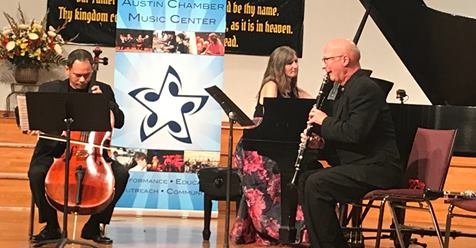
This past Saturday, I checked out Austin Chamber Music Center’s season opener, “Beauty on Water” at Northwest Hills United Methodist Church. It was first of a season dubbed Landscapes, in which each performance will highlight works from a different culture or country. This program featured the music of Scandinavian composers.
Performers included guest artist Håkan Rosengren from Sweden on clarinet, violinist Charles Wetherbee, cellist Bion Tsang, and the center’s artistic director Michelle Schumann on piano.
“Beauty on Water” included works from the Dane Emil Hartmann and Swedes Tor Aulin and Elfrida Andrée, as well as a work by Beethoven. All of the Scandinavian composers were new to me, and I really appreciated this exposure to a different culture.
I was particularly thrilled to meet Elfrida Andrée. Not only was her piece my favorite of the night, with a full, dramatic sound, but her life story turned out to be fascinating!
Throughout the evening, Michelle Schumann provided a brief commentary on each selection. Prior to Andrée’s Piano Trio No. 2 in G Minor, Schumann told the audience that Andrée had been a gifted organist in nineteenth century Sweden, where it was illegal for women to hold official organ posts in churches. Andrée and her family sued the government over this, and won. Andrée soon became organist at Gothenburg Cathedral, the most coveted organ post in the country. And as evidenced by Saturday’s performance, Andrée was also a gifted composer.
In addition to professional performances, the Austin Chamber Music Center offers chamber music coaching to students of all ages. Saturday night, as a pre-show treat, violin student Weiran Jiang performed a delightfully lyrical piece, accompanied by Schumann.
Landscapes runs through the end of April. Programs include Nostrovia, featuring Russian composers; It’s All Greek to Me East Meets West and The Melting Pot. Concerts are given twice, once on a Friday night in a private home, and then again on Saturday night at a public venue. The Friday concerts are sold out, but tickets remain for all Saturday performances. Prices for these run $25-$45.
Beauty on Water Spotlight: Håkan Rosengren
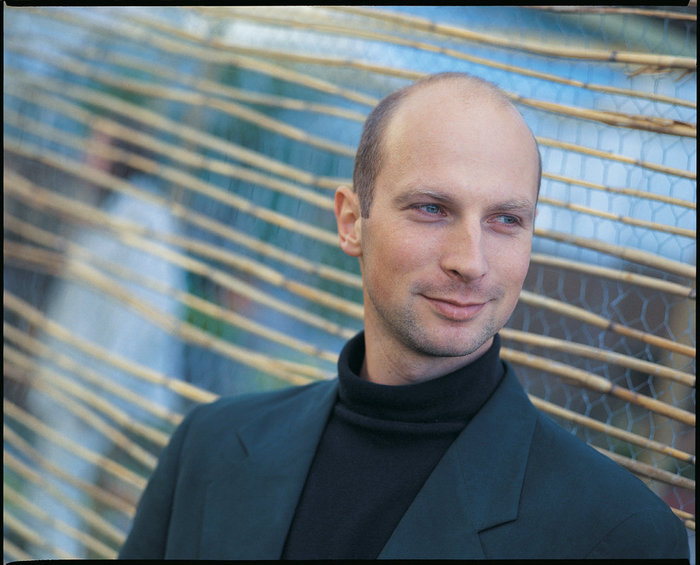
From learning about rhythm in his village of 150 people, to performing as an acclaimed soloist across the globe, Håkan Rosengren’s career as a clarinetist has been shaped and strengthened by his musical upbringing in Sweden. At our season opener next weekend, Beauty on Water, Rosengren will be sharing stories of his native country as well as performing Scandinavian works alongside artists Charles Wetherbee, Bion Tsang, and Michelle Schumann. Read about some of Håkan’s most memorable music experiences, from the most humble to the most glamorous, in our recent interview.
Where did you grow up, and how did music fit into your childhood?
I grew up in Steninge in Sweden, a small village on the southwestern coast located quite close to Denmark, with 150 inhabitants. In Sweden at the time every county had state subsidized community music schools, offering private lessons by highly qualified applied teachers, organized as a separate entity outside of the regular public school system though all lessons were taught as part of an after school program. The applied teachers travelled throughout the county to all the various public schools to teach private applied lessons to those who wished to enroll in the program. My parents were not musicians but had an interest in the arts and music and wanted me (and my siblings) to acquire a general education in music so they entered me in a class at age six to learn about rhythm, pulse and the western music notation system (the Kodaly Method). A year later I was registered for private recorder lessons at age seven and from age ten I was recruited by the community school’s director, who was a terrific clarinetist and teacher, to receive private lessons in applied clarinet as well as continued recorder lessons (from a teacher specialized on that instrument, of course). Music was one of many very important activities as I grew up but I was equally active with various sports activities after school, training 3-5 days per week in local clubs, and I also excelled in academics. Early on, starting at age 12, I participated in summer chamber music and orchestra programs in Sweden. From age seven I began going on a regular basis to the orchestra subscription series concerts, offered at the Grand Theater in Halmstad, which was the county seat in the region where I grew up. During my first six years of applied clarinet studies I worked with some superb teachers and musicians who all encouraged me to apply to enter into professional music studies first at the Music High School in Gothenburg and then at age 17 at the Swedish Royal College in Stockholm. I worked with the finest clarinetists and musicians Sweden had to offer and then with many internationally acclaimed clarinetists.
What is your favorite musical memory or artistic work from Sweden?
This is a difficult question to answer. Of course, my frequent concerto performances with all the major Swedish orchestras in our most prestigious concert halls have been memorable, especially my many collaborations with the Swedish Radio Symphony often in Nordic repertoire at live television and radio concerts, as well as on numerous studio cd recordings. Another standout memory is my first performance of Mozart Clarinet Concerto at an orchestra summer course at age 14.
But I think just as memorable have been performances of chamber music throughout Sweden in just about every town and village imaginable, in big and very small communities (and every size in between). I remember a concert in Gällivare, an important but small mining town in the far north of Sweden, where I performed chamber music for a sold out house of 35 people at the Community Music School’s Concert Hall. Of course there are the more glamorous memories with a near sell-out chamber music concert in the Stockholm Berwald Hall (Swedish Radio Symphony Hall with about 1000 seats or so) with Swedish film director Ingmar Bergman and a large portion of Sweden’s cultural elite and critics present in the audience. And then there is my memorable recital in Skärhamn Community Center with seven people in the audience and an old water damaged Chinese grand piano (played valiantly by collaborative pianist Rudolph Stakemann) and another recital in Mariestad Theater for six people, including a compulsory representative from the city’s fire department and my supportive mother, where “my” pianist heroically performed on an upright silent movie piano on wheels.
Review: 2018 Austin Chamber Music Festival
Review: 2018 Austin Chamber Music Festival
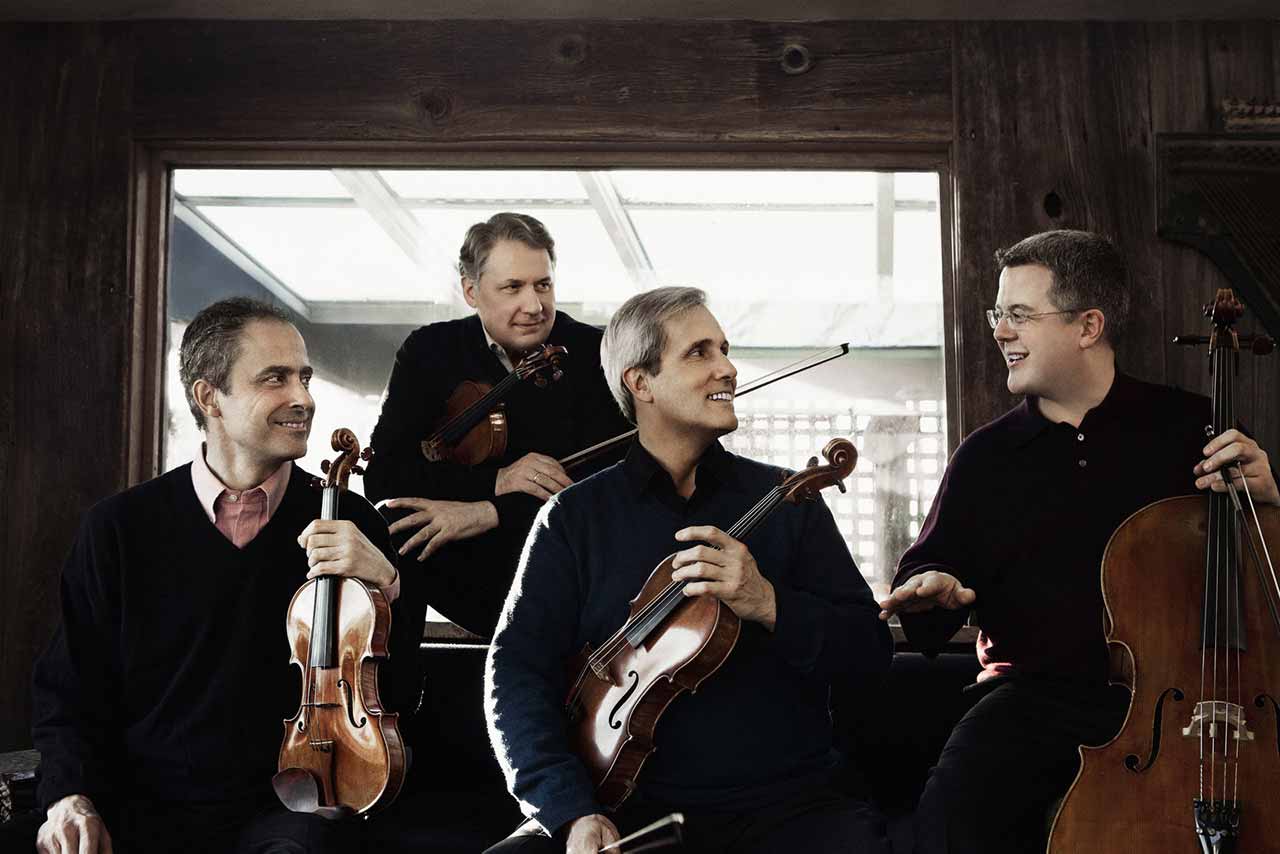
How the Attacca Quartet, Emerson Quartet, and invoke played
by Robi Polgar, Austin Chronicle, July 17, 2018
This year’s Austin Chamber Music Festival features three weeks of what Artistic Director Michelle Schumann calls “hardcore chamber music,” as a stellar array of performers explores a range of works, periods, and genres in performances large and intimate as well as in inspirational workshops for young musicians (of all ages).
Attacca Quartet, Bates Recital Hall, Sun., July 8
Among the young, though now well-established and internationally acclaimed, the Attacca Quartet rounded out the festival’s first weekend with a program of their favorite string quartets.
First was Beethoven’s summery, Mozart-influenced Opus 18 No. 5 in A Major. Yes, “summery,” for this is Beethoven conjuring the liveliness and joy of his predecessor with exuberant flourishes matched with the composer’s familiar bolder strokes, a dichotomy that had the quartet bouncing in their seats at the buoyant energy with which Beethoven infused this work.
The second piece, Dmitri Shostakovich’s Quartet No. 3 in F Major, Op. 73, constructed as a wartime narrative, began in (brief) innocence, darkened ominously, then launched into battle — a chaotic scene of driving, thrusting bowing — before resolving in the uneasy calm of an existential question. The quartet’s superb control was evidenced in the “Moderato con molto,” a haunting march so delicate it took one’s breath away, and by the musicians’ commitment to the vicious power of what violist Nathan Schram described as Shostakovich’s “heavy metal” emotional oomph.
Robert Schumann’s Quartet in A Major, Opus 41, No. 3, was third, the composer dedicating the piece to his wife Clara, a traveling pianist who was away on tour. Peppered throughout the first movement, a two-note down-stroke (the “Clara motif”) that echoed her name, sometimes plaintive, sometimes with delight, always heartfelt. The most “classical” of the three selections, this offered melodic shades of Mendelssohn and a churning longing that finished with a galloping, sprightly flourish.
Emerson String Quartet, Bates Recital Hall, Fri., July 13
If the performance of the Attaccans was intense, connected and physical, the overwhelming sensation of the following Friday night’s concert by the Emerson String Quartet was one of four musicians so accomplished in their craft, so monastically attentive to every nuance of the score, that the Beethoven works they played seemed to hang in the air over a packed Bates Recital Hall as if the music had achieved tangible form — the music seemed to be playing itself.
Among the last pieces the composer wrote, Beethoven’s String Quartets No. 13 and No. 14 transcend what one might consider their Beethoven-ness, or perhaps this was hyper-Beethoven, such is their scope. Schumann, introducing the ensemble, suggested we were about to hear something “more than music; something holy.” Indeed, this was the perfect union of veteran performers and, arguably, classical music’s greatest composer; the ease with which the former played this most sublime music evoked “a spiritual journey,” as Schumann put it.
From the first bow strokes of the “Adagio” of the String Quartet No. 14 in C-sharp Minor, delicate as an intake of breath, to the swaggering drama of the “Grosse Fuge” that brought the String Quartet No. 13 in B-flat Major to its conclusion, the Emersons explored every nook and cranny of this pair of extraordinary works.
Through it all, a feeling of Beethoven at play pervaded, the composer distilling pleasure — even fun — between the monumental, the energetic, the tense. There is dance, too, in these pieces, whose weight, color and balance as interpreted by four consummate musicians offered a glimpse of artists at the top of their game.
invoke, The Adventures of Prince Achmed with Original Live Score, AFS Cinema, Sat., July 14
Fun and games of a different variety were on display when the ever playful invoke — Austin-based purveyors of chamber music that busts through genres in the quartet’s spicy performances — performed an original score to accompany a screening of the oldest extant animated film, The Adventures of Prince Achmed. German director Lotte Reiniger’s 1926 fairy tale uses her silhouette animation technique to tell an evocative story of an adventure-seeking prince who finds, loses, then recovers his beloved. In the course of his adventures, he combats a wicked magician, aided by a powerful witch and Aladdin and the genies of the magic lamp.
Flanked by workshop students — a phalanx of violins and a bassoon to one side, four cellists, a keyboardist, and percussion on the other — invoke and company embarked on their own musical adventure, exploring chamber music to its edges, querying just what it means to be a “string” quartet. No surprise, then that the ensemble found opportunities to add mandolin, zither, and even a banjo to their enchanting aural escapades, their music soaring along with the animated mechanical flying horse or dropping into the sonorous depths of the dark cave where Aladdin’s lamp was discovered.
For adventurers of chamber music in all its forms, there are still discoveries to be made in this final festival weekend. The remaining performances are:
Schumann Chamber Players play a program of Smetana and Dvorak, Fri., July 20, 7:30pm, at Bates Recital Hall, 2406 Robert Dedman, UT campus.
Brooklyn Duo perform covers of pop songs and traditional music, Sat., July 21, 7:30pm, at Bates Recital Hall, 2406 Robert Dedman, UT campus.
A Midsummer Night’s Dream, a collaboration between the Austin Chamber Music Festival and Austin Shakespeare, featuring actors performing scenes from Shakespeare’s play and festival artists performing music inspired by the story, Sun., July 22, 4:30pm, at Bates Recital Hall, 2406 Robert Dedman, UT campus.
Pride Concert Preview: Sightlines
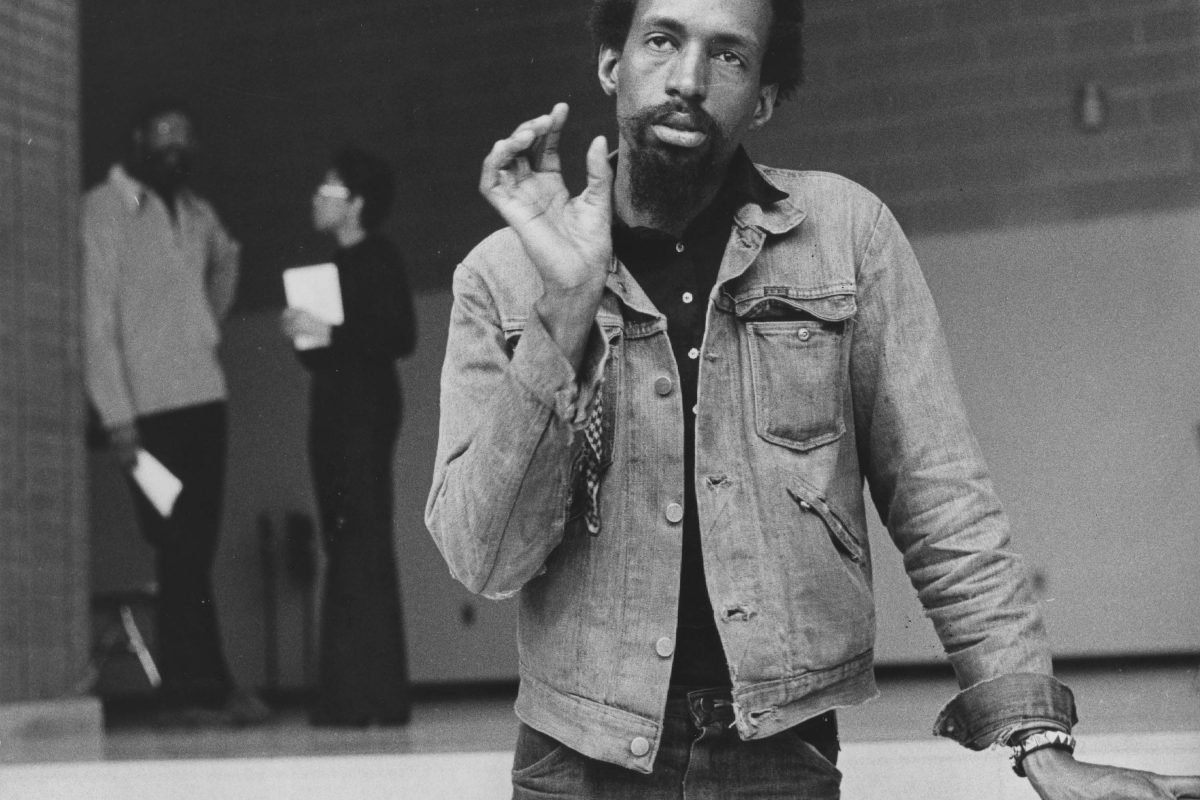
Julius Eastman to The Fullest
For its annual Pride Concert, Austin Chamber Music Festival presents “Femenine,” a masterpiece of the late queer, Black composer who was once all but forgotten
By Jeanne Claire van Ryzin, Sightlines, July 5, 2018
When minimalist composer Julius Eastman died in 1990, the 49-year-old had been homeless for nearly a decade. He’d long lost most of his possessions, including many of his scores, when he was evicted from his East Village apartment.
And though Eastman had once been a fixture in the New York music scene — an unforgettable presence who was brilliant, unapologetically queer and black; a collaborator of Meredith Monk, Robert Wilson and Pierre Boulez (no less) — almost no one knew he passed away of heart failure, alone, in a hospital in Buffalo, New York. The Village Voice was the first to run an obituary, eight months after Eastman had died.
“What I am trying to achieve,” Eastman said in a 1976 interview. “Is to be what I am to the fullest. Black to the fullest, a musician to the fullest, a homosexual to the fullest.”
During his lifetime, Eastman’s music — pulsating, challenging, political compositions with provocative titles like “Crazy Nigger” and “Gay Guerrila” — was never commercially recorded. And the lonely circumstances of Eastman’s death threatened to erase the composer and his music from the canon.
And yet, the last few years have seen a veritable “Eastmania” as an upwelling of interest in the composer expands.
On July 10, Austin composer Russell Reed will present Eastman’s “Femenine,” a 70-minute piece now recognized as one of the composer’s masterpieces. “Femenine” is performed as the Austin Chamber Music Festival’s “10th Annual Pride Concert,” a free concert that Reed has curated from its inception.
Reed has programmed Eastman’s music before as part of the Pride Concert. And we asked Reed to expound on the Eastman revival and choosing to perform the complex “Femenine” with an added role for a performance artist.
Sightlines: Why do you think Eastman’s music is enjoying a renaissance?
Russell Reed: I think his music is having a sustained renaissance for many reasons. The first is that it is really interesting and provides a different direction for minimalist music. His pieces rely heavily on improvisation and performer interaction. He sets up the guidelines, but the performers must work together, listen and choose the path of the music. That is part of the organic quality of his work that he often talked about — each new section adds material while keeping material from previous sections. His basic motives also have a sort of jazzy, dancey, groovy energy that is infectious, like a pop hook or riff that you can’t get out of your head.
S: As a composer, what interests you about Eastman’s music?
RR: I’ll admit that I am not the biggest fan of minimalist music. I certainly appreciate it, and for me listening to a piece like Riley’s “Music for 18 Instruments” or “8 lines” is like watching a set of giant pastel-colored screens pass slowly through one’s field of vision. It’s certainly interesting, but I’m always left feeling a bit cold, like I wasn’t really invited to participate in the emotion of the piece — if there even is any. Eastman’s music is different.
A page from Julius Eastman’s Gay Guerrilla score. Photograph: Andrew Przystanski and Bennington College
But Eastman’s pieces like “Stay On It,” “Crazy Nigger,” “Gay Guerrila” and “Femenine” seem to have a sense of longing, striving, and even anger — like a feeling of looking to get out of oneself or express a deep anxiety, pain or need for human connection. I call that feeling in a piece of music “Life Power” and for me it is a sort of miracle because it lives past the life of the one who created or gathered it. Eastman’s music reminds me of the work of Keith Haring and the Russian artist Timur Novikov. They worked with a type of minimalism but the results are not flat — they are emotional and produce as many feelings as they do thoughts.
I also think that the fact that Eastman was African-American and gay has something to do with his renaissance. Just speaking as a gay composer myself, I love all of the great composers, and I love music, so it is hard for me to dislike anything that seems done in earnest. But in a composer like Julius Eastman I see myself, I see my own imagination, my own existence in a culture — both broadly and in the gay culture. It’s completely irrational, but I feel like Eastman is a friend and compatriot, and we understand each other in a way that Debussy and I, for example, will never be able to.
S: A lot Eastman’s scores were not well preserved. Have you had to do an archival work or re-arranging of “Femenine?”
RR: Four years ago when we did “Stay On It” (for the Pride Concert) I was able to download the snippet of extant music from Mary Jane Leach’s website. A composer and vocalist Mary Jane was a friend of Eastman’s from the downtown New York music scene and she collected every score of Eastman’s that has been found and made it available for free to the public. We used that score and the recording to reconstruct the basic outline of the piece. Now most of Eastman’s music has been formally reconstructed by various groups and/or composers. Schirmer has bought the rights to all of his music and will be publishing it sometime in the future. Mary Jane sent me the reconstructed score of “Femenine,” done by Bower Bird Ensemble. Even with this “real” score we have had to go through and make some decisions about how we are going to structure the piece. It’s long, about 70 minutes, and the score that came out of theBower Bird Ensemble recording doesn’t exactly match the original performance. So needless to say there is room to shape the work as needed; that’s part of the process.
S: How would you describe the music of “Femenine” and why chose this piece in particular?
RR: This may sound cheesy, but I tear up every time I start listening to “Femenine.” The whole piece is structured around one simple statement from the vibraphone that is repeated throughout the piece. The other players gradually enter and begin the process of continuously expanding the music for the next hour. There is a definite sense of opening, expanding, of listening. Such freedom all within a tightly structured and economical basic statement. It’s like breathing. It’s like opening up to sound.
At the original 1974 performance of “Femenine” Eastman showed up wearing a dress and insisted that everyone be fed soup, which he had made himself. I love that freedom. In that same spirit I think having Austin artist Michael Anthony Garcia contribute his visual and performance work during the piece is something Eastman would have certainly been down with.